
ON THE RADAR
Targeting "Zombie Cells": Decoding the Science of Senolytic Skincare
Longevity science is officially replacing traditional "anti-aging"—here is how to tell real cellular biotech from a marketing buzzword.
On this page
For decades, topical skincare has focused almost entirely on stimulation: nudging sluggish fibroblasts to pump out more collagen using retinoids, peptides, or controlled thermal injury. Now, longevity science is shifting the conversation from forced stimulation to cellular housekeeping.
At the center of this movement is senotherapeutics—a class of biotech ingredients designed to target senescent cells, better known in dermatology labs as "zombie cells."
What Exactly Is a "Zombie Cell"?
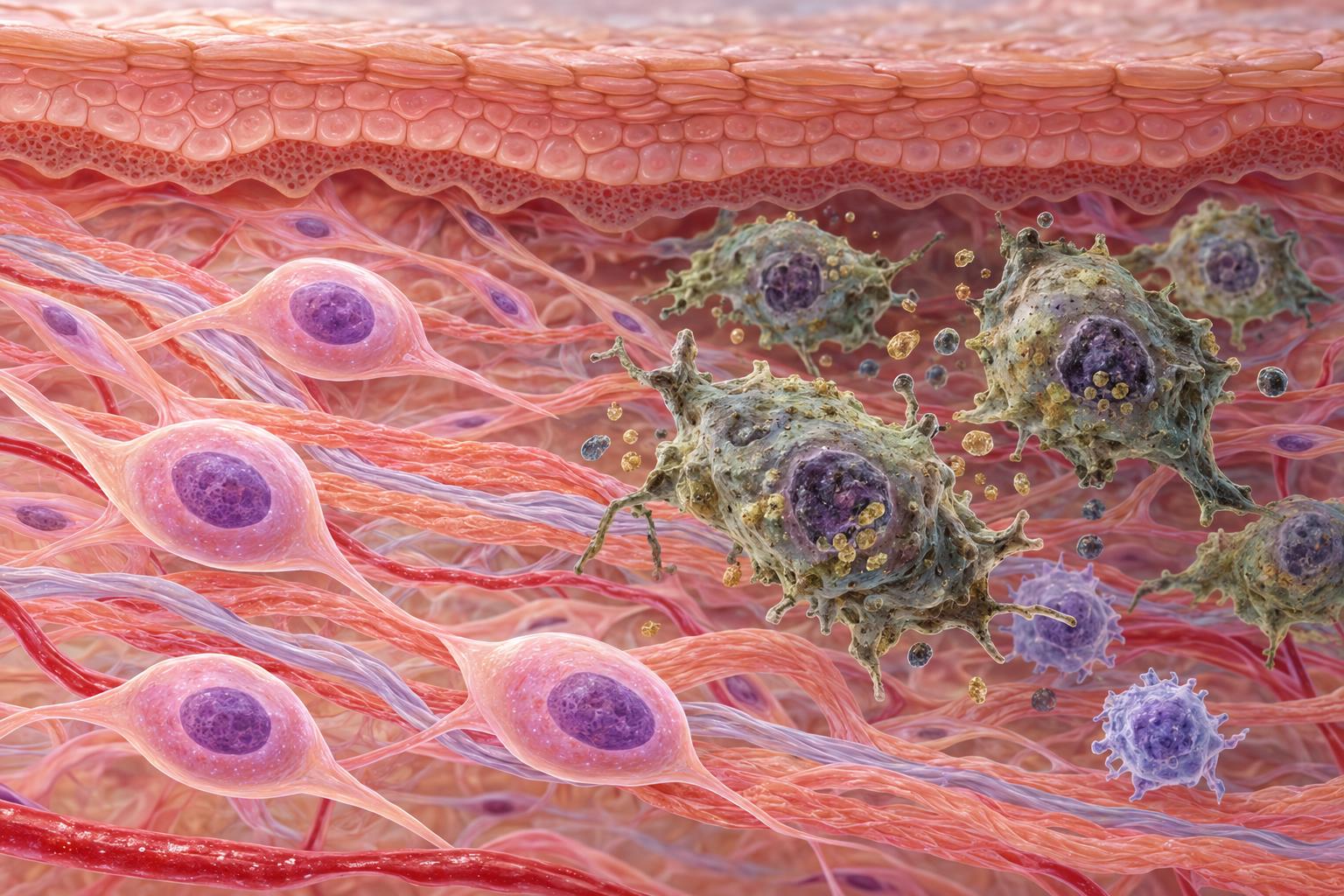
Healthy skin cells divide, perform their structural duties, and eventually undergo apoptosis (programmed cell death) to make room for fresh, healthy cells. However, as skin accumulates UV damage, oxidative stress, and chronological wear, certain cells stop dividing cleanly—yet refuse to die.
Instead of clearing out, these senescent cells linger in the dermis and epidermis, secreting a toxic cocktail of pro-inflammatory cytokines, growth factors, and matrix-degrading enzymes (MMPs) known as the Senescence-Associated Secretory Phenotype (SASP).
Think of one rotten apple spoiling the whole barrel: SASP triggers chronic, low-grade inflammation ("inflammaging"), shreds surrounding collagen and elastin fibers, and infects neighboring healthy cells—driving laxity, stubborn redness, and a compromised barrier.
Senolytics vs. Senomorphics: Can a Cream Actually Work?
When evaluating longevity skincare, it helps to separate the two ways scientists target cellular senescence:
- Senolytics (Cell Clearing): Compounds that selectively induce apoptosis in senescent cells so the body can clear them out, without harming healthy, functioning cells.
- Senomorphics (Signal Quieting): Ingredients that do not destroy the zombie cell but rather mute its inflammatory SASP signals so it stops damaging neighboring tissue.
While pharmaceutical senolytics (like Dasatinib) are too aggressive for cosmetic use, cosmetic biochemists have identified targeted botanical flavonoids and bio-energizers that achieve localized senolytic and senomorphic activity on the skin.
3 Biotech Actives with Real Clinical Backing
1. Purified Swiss Alpine Rose Extract (Rhododendron ferrugineum) Pioneered by Swiss biotech lab Mibelle Biochemistry, Alpine Rose Active is rich in taxifolin and farrerol—molecules structurally similar to potent senolytic flavonoids. In in vitro fibroblast assays (Cosmetics, 2022), a 1% concentration reduced senescent dermal fibroblasts from 28.1% down to 10.1% while leaving healthy cells completely untouched. In human in vivo clinical testing, applying a 2% cream twice daily significantly reduced facial redness in 14 days and measurably improved skin elasticity and firmness within 28 days.
2. Fisetin & Quercetin (Polyphenolic Flavonoids) Identified in landmark longevity research (EBioMedicine, 2018) as the most potent naturally occurring senolytic flavonoid, fisetin (alongside quercetin and Epilobium fleischeri / alpine willowherb extract) works by inhibiting the survival pathways that zombie cells rely on to resist death. In topical formulations—typically dosed around 0.1% to 1%—fisetin calms SASP-driven redness and clears senescent buildup so peptides and barrier lipids can work in a healthier cellular environment.
3. NAD+ Precursors (NMN, NR, and Niacinamide + Bio-Boosters) While senolytics clear the cellular debris, NAD+ (Nicotinamide Adenine Dinucleotide) keeps healthy cells from turning into zombies in the first place. Because intact NAD+ is too large and unstable to penetrate the stratum corneum effectively on its own, smart formulas rely on precursors like NMN (Nicotinamide Mononucleotide), niacinamide, or sunflower sprout extracts (which stimulate the salvage enzyme NAMPT) to fuel mitochondrial DNA repair and ATP production.
How to Spot "Longevity Washing"
Because "cellular longevity" commands a luxury price tag, plenty of brands are slapping the term onto basic moisturizers. Before investing, check the INCI list against 3 criteria:
- Look for Named Mechanisms, Not Vague Claims: Skip bottles that just promise "longevity" on the front label. Look for standardized senolytic extracts (Rhododendron Ferrugineum Leaf Extract, Epilobium Fleischeri Extract, Fisetin, or Quercetin).
- Skip Raw "NAD+" Claims Without Delivery Tech: If a brand claims pure topical NAD+ without liposomal encapsulation or smaller precursors (NMN/Niacinamide), it is mostly sitting on the surface of your skin.
- Prioritize Barrier Synergy: Clearing senescent signals only matters if you protect the healthy cells left behind. Pair senolytics with proven barrier builders like ceramides, ectoin, or CoQ10.
For a visual breakdown of how Swiss alpine rose extract selectively clears senescent fibroblasts in clinical testing, watch the video below on the Mibelle Biochemistry Alpine Rose Active Senolytic Mechanism.