
THE SCENE
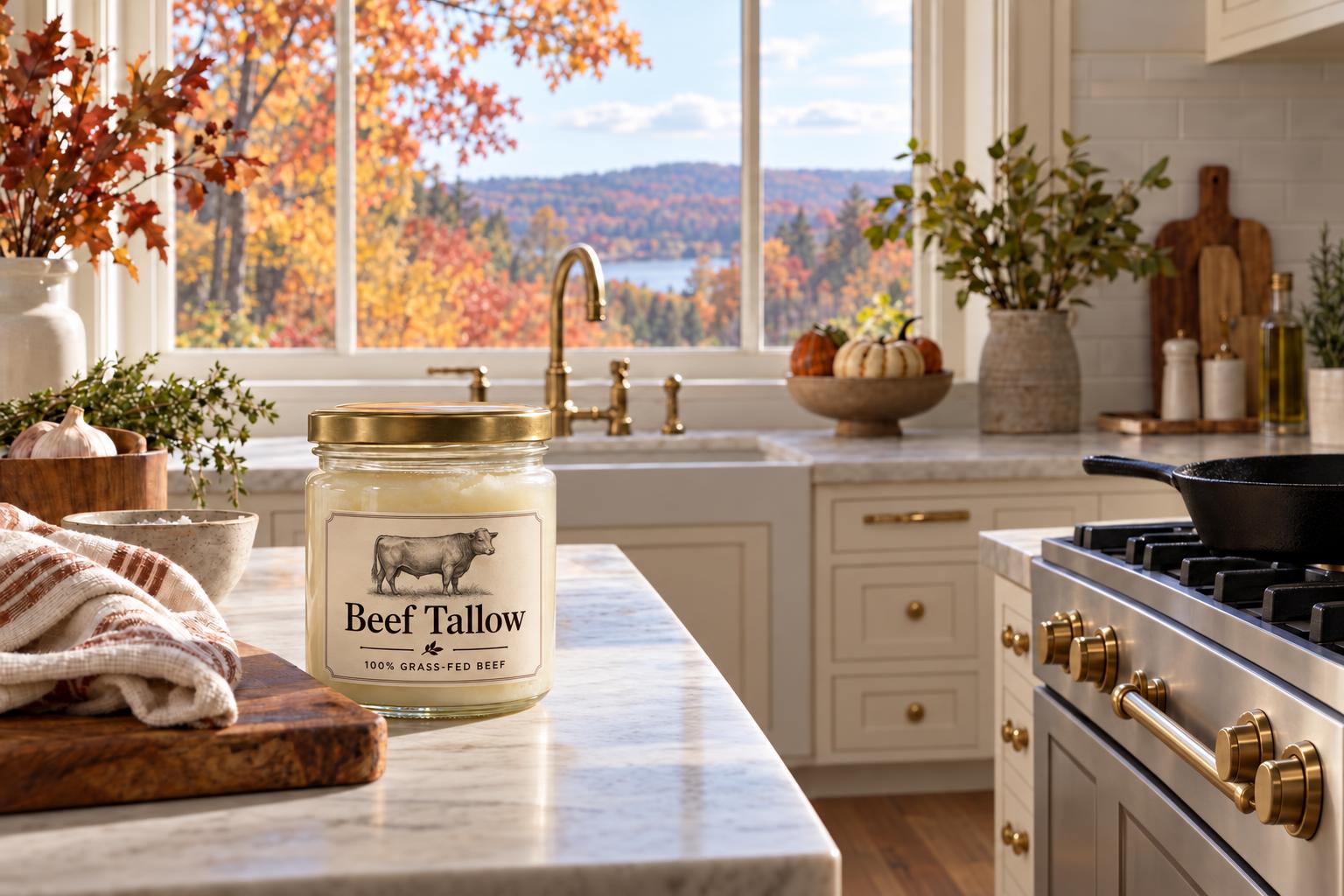
Please Put Down the Beef Tallow: The Non-Comedogenic Guide to Barrier Repair
Viral "ancestral" skincare promises the ultimate autumn moisture reset. Here is why slathering rendered animal fat on your face is a pore-clogging trap—and the biocompatible heroes your skin actually craves.
On this page
Every autumn, right as the humidity drops and our nightly retinoids start feeling a little spicier than usual, the beauty algorithm serves up a "miracle" cure for dry, stressed skin. Lately, that miracle has taken a decidedly medieval turn.
Searches for "beef tallow moisturizer" have surged by a staggering 472%, fueled by wellness influencers declaring that rendered cow fat is the ultimate "ancestral, bio-identical" secret to healing a compromised skin barrier.
Here is what those viral videos aren't showing you: a quieter spike in search volume happening just three weeks later, as thousands of women frantically Google how to clear sudden, stubborn closed comedones, milia, and deep congestion. When your skin is flaking from a drop in temperature or a committed relationship with prescription tretinoin, the urge to reach for the heaviest occlusive in the room is understandable. However, confusing heavy with healing is the fastest way to trade a dry skin problem for a breakout problem.
The "Bio-Identical" Myth—And Why Tallow Clogs Pores
The central pitch of the tallow movement is that beef fat is biocompatible because its chemical structure closely mimics human sebum. On the surface, it sounds convincing. Under a microscope, the chemistry falls apart.
While human sebum contains triglycerides and fatty acids, its unique magic lies in its high concentration of wax esters (around 25%) and squalene (around 12%)—compounds that exist almost nowhere else in nature in those ratios. Beef tallow contains virtually zero squalene or wax esters. Instead, it is composed almost entirely of heavy triglycerides dominated by palmitic, stearic, and oleic acids.
For anyone with even a passing acquaintance with clogged pores, that fatty acid profile is a dermatological minefield:
- The Oleic Acid Imbalance: Research consistently shows that acne- and congestion-prone skin is naturally deficient in thin, fluid linoleic acid and overly abundant in thick oleic acid. Applying oleic-heavy tallow doesn't balance your skin; it tips the scales toward sticky, sluggish sebum that compacts inside the pore.
- The Suffocation Effect: Rather than integrating seamlessly into your lipid matrix, heavy animal triglycerides sit on top of the stratum corneum like cling wrap. If you use cellular-turnover actives like retinoids or azelaic acid, tallow traps shedding dead skin cells and heat underneath an impenetrable film—creating the ideal oxygen-free environment for C. acnes bacteria to thrive.
- Oxidation and Inflammation: Unrefined animal fats are notoriously prone to lipid peroxidation when exposed to air and light. When fats oxidize on your face, they trigger low-grade inflammation that further degrades your barrier—not to mention leaving you with the faint aroma of a Sunday roast.
The Alternatives: 4 Biocompatible Barrier Heroes
Think of your skin barrier as a brick wall: skin cells are the bricks, and your natural lipids (ceramides, cholesterol, and fatty acids) are the mortar holding them together. When autumn air or powerful actives strip your skin, microscopic cracks form in your natural lipid "mortar," allowing water to escape and irritants to sneak in. To repair those cracks without triggering a breakout, skip both the kitchen grease and traditional winter creams loaded with sneaky pore-cloggers like isopropyl myristate or ethylhexyl palmitate.
Instead, reach for modern, non-comedogenic formulations designed to rebuild the barrier cleanly:
1. 100% Sugarcane-Derived Squalane
Because pure squalene oxidizes too quickly in a bottle, cosmetic chemists hydrogenate plant sugars into squalane—a shelf-stable, weightless hydrocarbon that your skin recognizes instantly as its own. It slips effortlessly between skin cells to prevent moisture loss, softens flaky retinoid patches on contact, and is completely non-comedogenic.
2. Ectoin
Discovered in microorganisms that survive extreme desert salt lakes, this amino acid derivative acts as a cellular shield. Ectoin binds water molecules into a structured hydration shell around your skin cells, stabilizing cell membranes against temperature drops and prescription-active irritation without a hint of heavy residue.
3. Sterile Calming Emulsions
When your barrier is compromised, even standard preservatives and botanical extracts can trigger a hot, prickly, reactive sensation. French pharmacy sterile cosmetics—housed in airtight, one-way pump packaging—use minimal, ultra-pure ingredients like thermal spring postbiotics and pure squalane to quiet angry nerve endings and hydrate deeply with zero pore-clogging waxes.
4. Panthenol (Vitamin B5) & Biomimetic Ceramides
While heavy occlusives merely trap moisture at the surface, panthenol acts as both a humectant and a wound-healing catalyst, stimulating the skin to synthesize its own barrier lipids. Paired with skin-identical ceramides in a breathable lotion or gel-cream vehicle, it repairs your barrier from the inside out—leaving beef tallow right where it belongs: in a cast-iron skillet.