
ON THE RADAR
19 Million Vibrations Per Second: Meet the New Quadthera Minititan
High-frequency Korean ultrasound technology, without the four-figure price tag.
On this page
If you have been following the rise of Local Dynamic Micro-massage (LDM) and high-frequency ultrasound in Korean dermatology clinics, you already know the appeal: non-thermal, non-invasive sound waves that calm inflammation, rebuild a compromised moisture barrier, and give skin an unmistakable "glass skin" bounce.
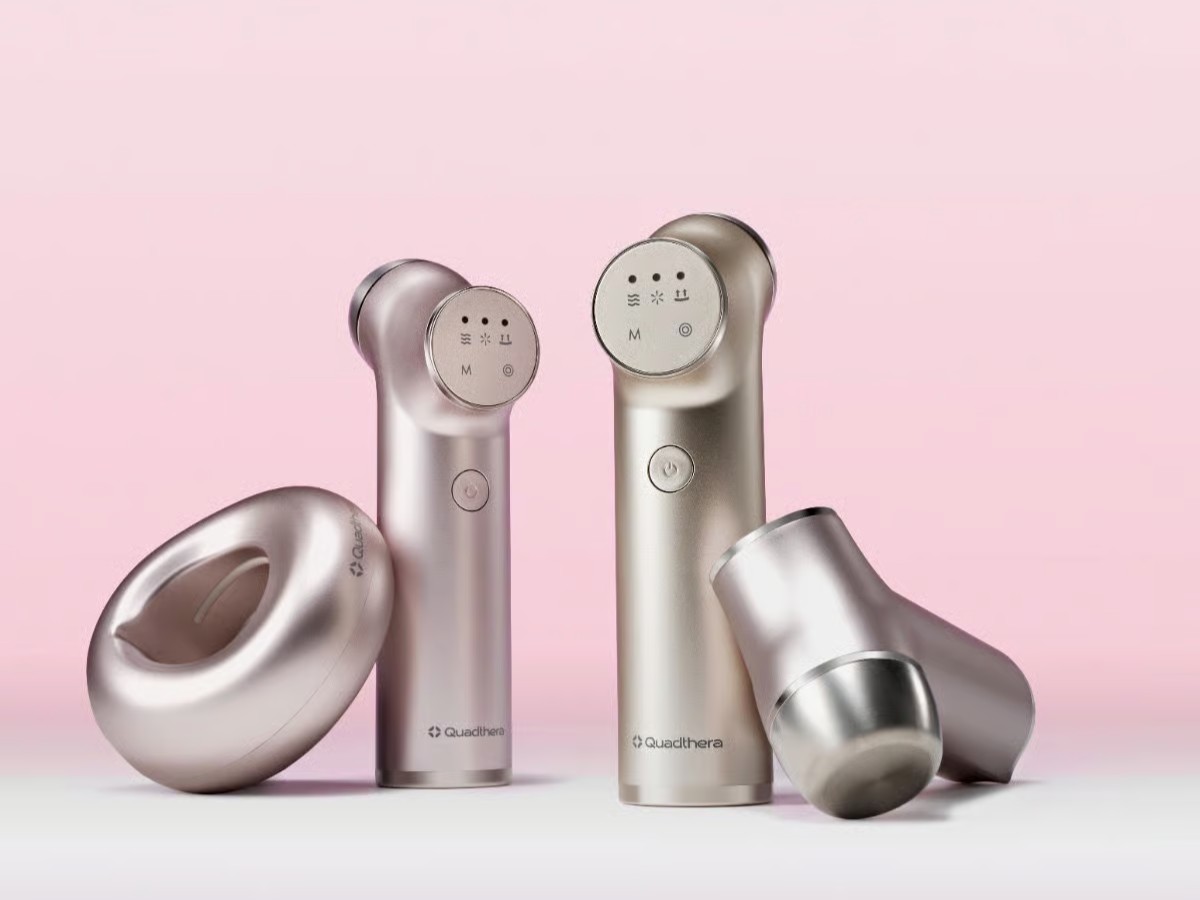
Until recently, bringing Quadthera's multi-frequency ultrasound home meant investing $1,100 in the flagship Titan. Now, the brand is making its clinical-grade Korean engineering far more accessible with the launch of the Quadthera Minititan ($399, currently on pre-order and estimated to ship mid-November).
The Science: Why High MHz Matters
Unlike microcurrent or radiofrequency devices that rely on electrical currents or heat, the Minititan uses pure acoustic sound waves generated by 30 years of piezoelectric ceramic research.
What separates serious LDM-style devices from generic ultrasonic tools is high-frequency modulation. While basic wands stay locked at lower frequencies (1 to 3 MHz), the Minititan alternates between three distinct frequencies to target multiple depths of the skin simultaneously:
- 19 MHz (Upper Layers): Delivers 19 million vibrations per second near the surface to refine texture, boost radiance, and create superficial bounce.
- 10 MHz (Middle Layer): Targets the epidermis and dermal-epidermal junction, the sweet spot for skin barrier repair, calming sensitivity, and balancing hydration.
- 3 MHz (Deepest Reach): Creates a gentle micro-bubble massage that enhances cellular permeability and helps active skincare ingredients absorb more effectively.
Inside the Three Treatment Modes
Weighing just 128 grams, the Minititan features a biocompatible Grade 2 Titanium head for steady energy delivery with minimal loss. Instead of overwhelming menus, it streamlines your 10-minute routine into three targeted care modes, each with two intensity levels:
- Mode 1: Calming Care (3 · 10 MHz): Designed to soothe reactive, irritated skin and restore barrier balance.
- Mode 2: Glow Care (10 · 19 MHz): Focuses on the upper and middle layers to replenish moisture across the stratum corneum for immediate radiance.
- Mode 3: Firming Care (3 · 10 · 19 MHz): Cycles through all three frequencies to support pore-area skin density and elasticity.
In human application testing by the P&K Skin Research Center (using the Minititan paired with the included FORHERTZ 3D Booster Mask Gel), participants saw a +123.9% boost in hydration across 20 layers of the outer skin, an +82.4% improvement in elasticity recovery, and an +18.9% increase in pore-area skin density.
Minititan vs. The Flagship Titan: What’s the Trade-Off?
So, what do you sacrifice by saving $701? The original Quadthera Titan features four frequencies (1, 3, 10, and 19 MHz) and five modes, including the brand's patented Q Mode sequence.
By omitting the 1 MHz frequency, the Minititan skips the deepest tissue penetration, focusing strictly on the superficial to mid-dermal layers (3, 10, and 19 MHz). However, since 10 MHz and 19 MHz are the true workhorses for barrier health, epidermal density, and surface glow, the Minititan retains the exact frequencies most users want from an at-home ultrasound device—making it one of the most interesting launches of the season.
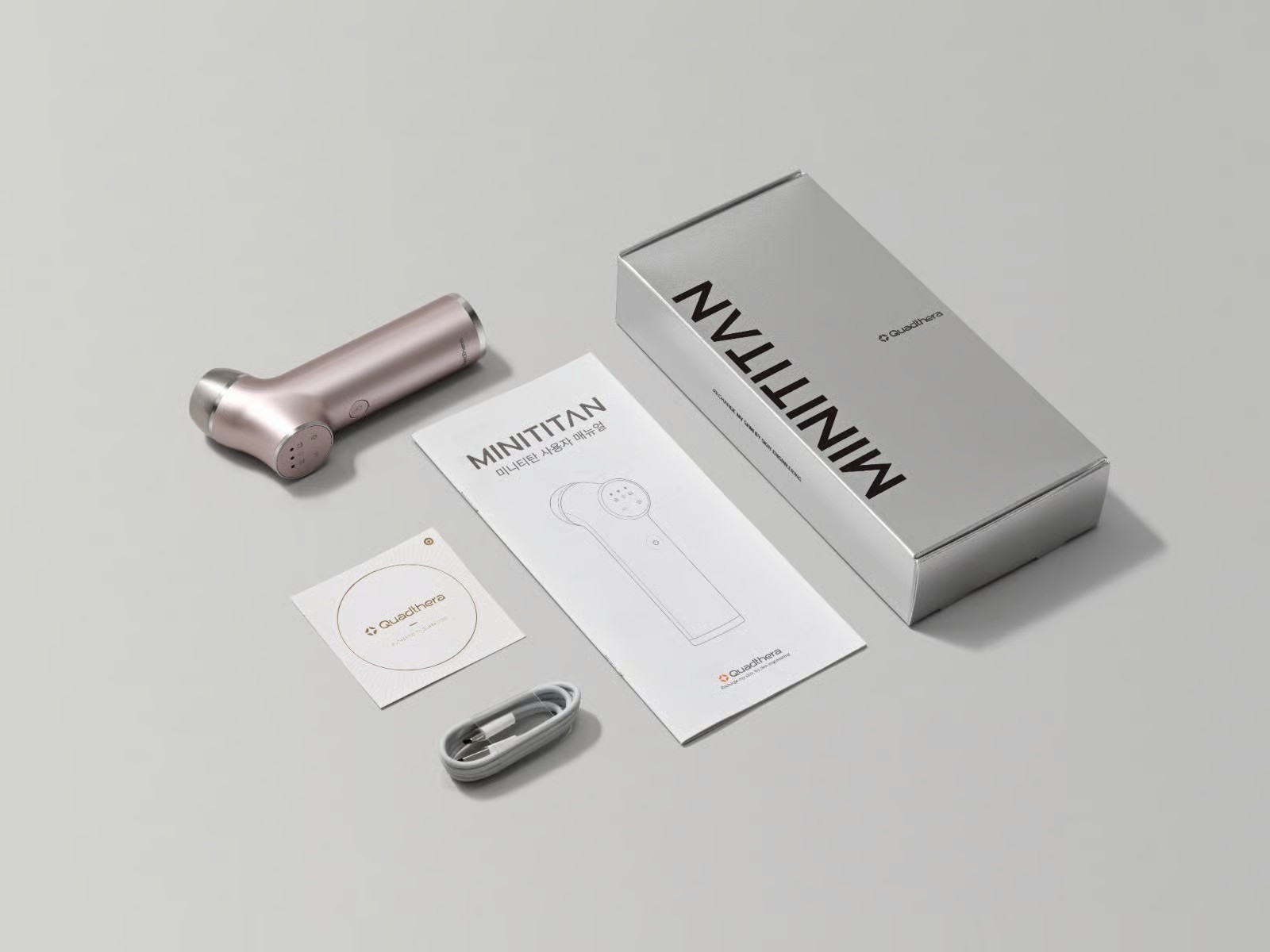
Image source: Quadthera